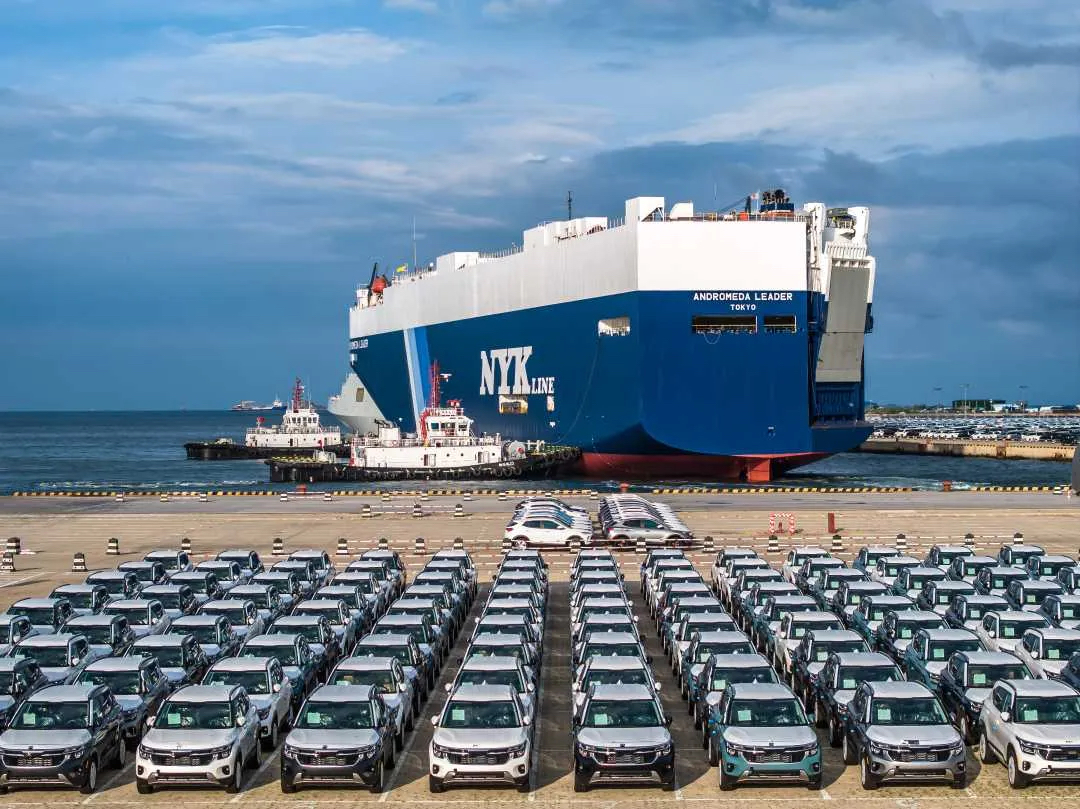
As of August 3, July sales figures for China’s “Top Five Domestic Automakers” have all been published, finalizing the ranking and line-up. There were no changes to the list this cycle, which continues to consist of five established Chinese OEMs.
Detailed sales data are as follows:
BYD Auto: 419,211 units, including 179,841 overseas sales
Chery Automobile: 276,820 units, including 202,533 overseas sales
Geely Auto: 250,161 units, including 106,663 overseas sales
Changan Automobile: 201,700 units, including 82,300 overseas sales
Great Wall Motors: 108,067 units. Its overseas sales registered a year-on-year increase of 50.93%. Based on the growth rate and its overseas volume of 41,088 units recorded in July 2025, the brand’s overseas sales for July 2026 are estimated at roughly 62,014 units.
Li Auto, a highly anticipated new energy vehicle startup, failed to break into the Top Five domestic automaker ranking in July. Nevertheless, the brand delivered 101,267 vehicles over the month, representing a 102% year-on-year surge. Multiple new models from Li Auto are seeing climbing sales volumes, making August a critical test for the brand as it vies for a spot among China’s top five indigenous automakers.
Sales data from these five leading domestic carmakers reveal a worrying trend: while export volumes remain robust, domestic market demand has visibly softened. In Chery’s case, overseas sales account for 73.16% of its total deliveries. For Great Wall Motors, the proportion stands at approximately 57.38%. Although the ratios for the other three manufacturers are lower, their absolute overseas sales volumes remain substantial. It is now widely acknowledged that China’s domestic passenger vehicle market has entered a stock competition phase.
Against this backdrop, the overall year-on-year passenger vehicle sales growth for July merits continued close monitoring.
China’s passenger vehicle sales reached 8.288 million units in the first half of 2026, a year-on-year decline of 24.3%. Breakdown data shows sales of traditional fuel-powered vehicles hit 3.694 million units, down 31.9% year on year, while domestic new energy vehicle (NEV) deliveries totalled 5.09 million units, falling 13.4% year on year. These figures warrant sober interpretation. While NEV penetration appears to rise, overall automotive market sales keep contracting. The drop in fuel car sales has not been offset by NEV growth; instead, domestic sales of both fuel vehicles and NEVs are in decline.
In addition, industry profit margins have sunk to historic lows, pointing to a tough operating landscape across the sector.
This raises a vital question: should efforts be made to foster a healthier competitive landscape, putting an end to persistent criticism and mockery targeting fuel-powered vehicles?
The first half of 2026 proved extremely difficult for fuel car manufacturers, yet certain enterprises and media outlets have added unnecessary pressure to the segment.
Fuel car demand faces headwinds from volatile international crude prices. Influenced by shipping conditions in the Strait of Hormuz, global oil prices repeatedly hit multi-year highs in the first half of the year and through July, pushing retail prices of No. 92 gasoline close to the 8-yuan mark and driving up running costs for fuel vehicle owners. While maritime disruptions stemming from tensions between the United States and Iran have not triggered a global oil crisis, they have severely rattled markets for traditional internal combustion engine vehicles. Under such circumstances, stakeholders ought to stabilise consumer sentiment, deliver objective analysis and offer rational guidance for vehicle buyers considering fuel-powered models.
Instead, recent discourse has featured blanket dismissal of fuel vehicles and even ridicule toward fuel car consumers. Reasonable price adjustments for new and used fuel cars have been distorted as evidence of a full-blown collapse in the fuel vehicle industry, stoking narratives of an industrial crisis.
Nonetheless, new energy vehicles have inherent limitations in applicability, and fuel vehicles remain irreplaceable for a large group of consumers. Continued bearish rhetoric targeting fuel vehicles will only inflict losses on the wider automotive industry. It will not trigger a large-scale shift of market share from fuel vehicles to NEVs. If shrinking fuel car sales drag down overall passenger vehicle deliveries, consumer wait-and-see sentiment will intensify, to the detriment of the whole market.
It is therefore advisable to guide public discourse appropriately and keep a close watch on entities that deliberately propagate pessimism about fuel vehicles.
Furthermore, policymakers should accelerate the implementation of equal treatment for internal combustion and new energy vehicles. Harmonised policies should be rolled out quickly for vehicle and vessel tax as well as purchase tax applicable to both vehicle types. Preferential traffic privileges exclusively reserved for NEVs should be fully phased out. NEV-specific licence plates can be retained, but new energy vehicles should no longer enjoy special exemptions from traffic restrictions and licence plate quotas.
The market should be allowed to self-adjust. Through this process, a balanced market dynamic and new sources of sales growth can gradually emerge.