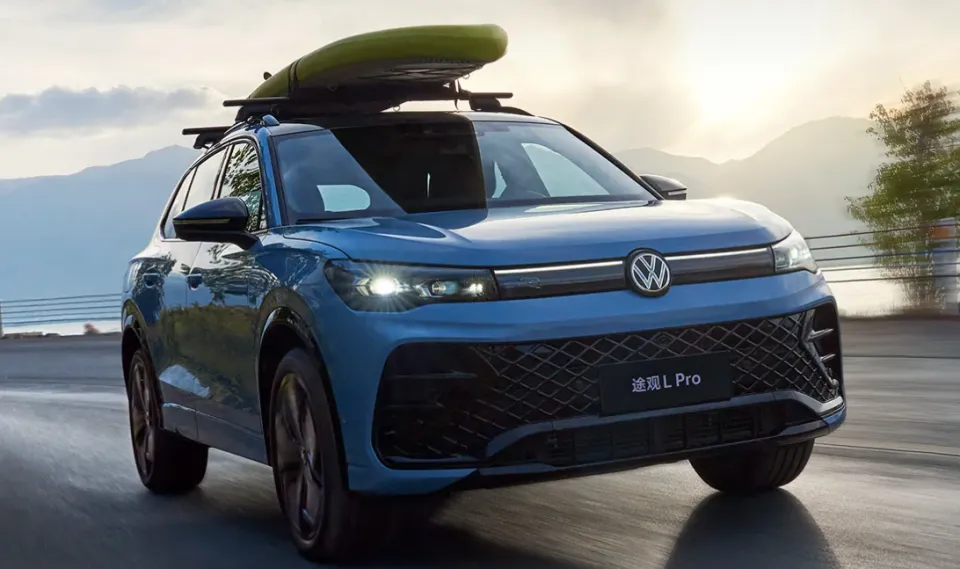
It is surprising that even amid today’s explosive growth of electric vehicles, numerous gasoline-powered cars still clock monthly sales exceeding 10,000 units. Today we take an in-depth look at the Volkswagen Tiguan L.
Nearly all motorists are familiar with the Volkswagen Tiguan. The nameplate first arrived as an imported model, before spawning a domestically built Tiguan variant, and later evolving into the current long-wheelbase Tiguan L. Recent sales figures show the model consistently moves roughly 10,000 units per month, an impressive track record that speaks volumes about widespread customer recognition. At the end of August this year, the 2027 Volkswagen Tiguan L Pro officially launched with four trim levels. Trade-in pricing ranges from 149,900 yuan to 266,800 yuan. The entry-level price is undeniably accessible, and consistent with other SAIC Volkswagen vehicles, its full powertrain comes with a lifetime warranty.
Starting with exterior styling, the new Tiguan L Pro bears an increasingly strong resemblance to the Volkswagen Touareg, particularly in its front fascia demeanor. The front end features extensive horizontal creases that widen the vehicle’s visual stance, paired with sharp, aggressive headlight assemblies. The side profile retains a sporty silhouette, fully equipped with keyless entry, roof rails and large 20-inch alloy wheels.
Dimension-wise, the 2027 Tiguan L Pro measures 4,735 mm long, 1,842 mm wide and 1,682 mm tall, with a wheelbase of 2,791 mm. It remains positioned as a midsize large five-seater SUV.
The automaker markets its cabin as an ultra-intelligent gasoline SUV, and for good reason. The 2027 Tiguan L Pro adopts a next-gen smart cockpit supporting six interconnected displays, including a HUD head-up display. Highlights include a 15-inch central touchscreen and wireless phone charging. Its onboard infotainment system integrates an AI large language model alongside universal mobile phone connectivity compatible with all mainstream smartphone ecosystems.
The updated model boasts a substantial upgrade in standard equipment. New additions include Harman Kardon premium audio, a 360-degree panoramic camera system with transparent chassis view, plus seats with heating, ventilation, 10-point massage and memory functions. Standout comfort and tech features extend to three-zone automatic climate control, the Xingyun intelligent driving assistance suite, 1080P cameras and a 11.6-inch passenger entertainment screen. A built-in fragrance diffuser system is also a surprising new inclusion.
Under the hood, the base variant is fitted with the 300TSI 1.5T powertrain, the key factor behind its sub-150,000-yuan trade-in price tag. A 2.0T engine is also available across higher trims. Both engines pair with a seven-speed wet dual-clutch transmission, while top-tier 2.0T versions gain an intelligent all-wheel-drive system.
That said, the 2027 Tiguan L Pro carries one obvious drawback. Though the base model’s 149,900-yuan trade-in price delivers outstanding value, the price gap between the entry trim and mid-range specification hits a staggering 86,000 yuan, with mid-tier models starting at 236,800 yuan — leaving buyers in a tough decision-making bind.
The entry-level 2.0T variant already costs 236,800 yuan after trade-in discounts, raising questions over its market viability. At that price point, consumers can access many all-electric six-seater SUVs that match or surpass the Tiguan L Pro in onboard intelligence, interior space and energy efficiency. For this reason, it is reasonable to predict near-term price cuts for the model, primarily targeting its 2.0T-equipped trims shortly after launch.