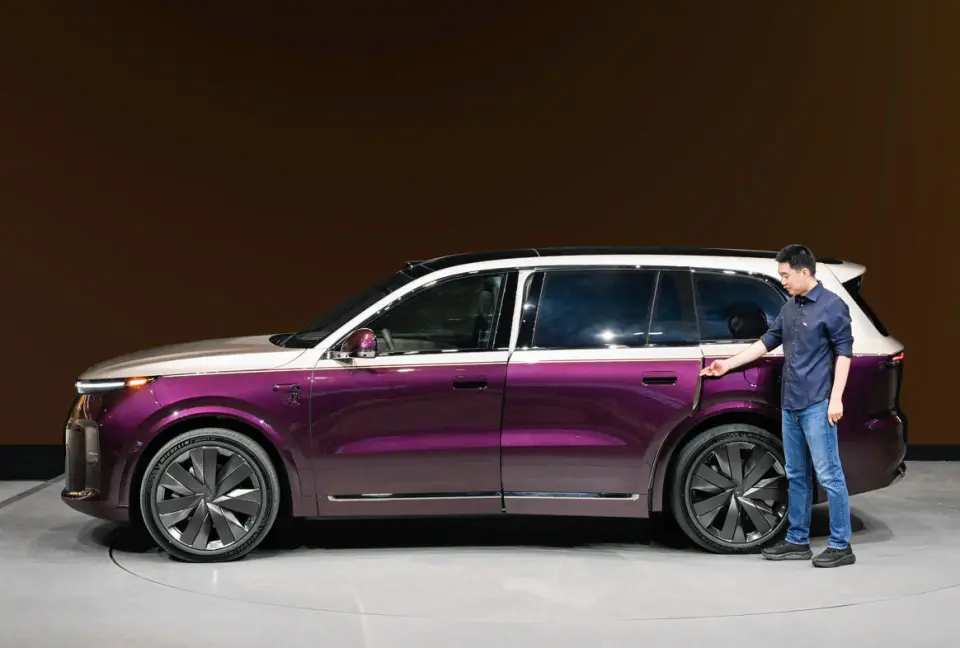
Data shows the average transaction price of luxury vehicles in China’s market slid to 329,000 yuan in 2026, a dip of 3,000 yuan compared with 2025. This modest decline in average pricing stems not from downgraded quality of luxury vehicles, but structural shifts driven by mass entry of Chinese independent automakers into the luxury segment.
Traditionally, luxury was defined by brand heritage, premium interior materials, large-displacement powertrains and refined chassis tuning. Amid the new energy vehicle (NEV) revolution, however, the definition of luxury has expanded dramatically. Long driving ranges, ultra-fast charging, smart cockpits, high-level intelligent driving, spacious cabins and family-oriented comfort features have become core criteria for buyers evaluating luxury cars. Instead of merely matching hardware specs of foreign luxury rivals, domestic brands develop premium products tailored to real-world driving scenarios for Chinese consumers, integrating family mobility demands and cutting-edge digital driving experiences. A growing number of high-budget buyers are casting aside biases toward legacy luxury brands and opting for premium Chinese NEVs, forcing the entire luxury vehicle market to adopt more pragmatic pricing strategies. Competition in the industry has shifted from a battle over brand prestige to a contest of comprehensive product strength.
Looking back at the evolution of China’s luxury vehicle market, fuel sedans long dominated the segment. They served as standard vehicles for business receptions, status symbols marking career milestones, and top picks for high-net-worth households. Yet market trends have undergone a radical transformation within just a few years: new energy SUVs are rapidly overtaking conventional fuel sedans to become the preferred choice of affluent Chinese buyers.
For high-net-worth families with multiple children seeking all-purpose vehicles for daily family transport and occasional long-distance road trips, SUVs boast inherent advantages including ample cabin space, superior ground clearance and greater cargo capacity that better suit diverse travel needs. Maturing NEV technology has further eliminated historic drawbacks of fuel-powered SUVs: electric platforms resolve longstanding pain points such as high fuel consumption, sluggish power delivery and poor NVH (noise, vibration and harshness) performance. Smooth electric acceleration, zero-emission driving and drastically lower daily running costs have cemented new energy SUVs as the new backbone of the luxury consumer market.
Homegrown premium NEV marques including Zeekr, AITO, Li Auto and Denza hold three core competitive edges. First, they boast a generational lead in intelligent mobility experiences. Backed by China’s sophisticated smart automotive supply chain, these brands deploy the latest chips, cutting-edge algorithms and seamless in-vehicle infotainment systems on new models ahead of legacy luxury competitors at equivalent price points, delivering superior voice interaction, vehicle connectivity and assisted driving functionality. Second, they excel at scenario-driven product development. Designed around authentic Chinese family travel needs, models come standard with rear-seat entertainment screens, massaging seats, vehicle refrigerators and vehicle-to-load external power supply, precisely addressing pain points for large families and long-distance travelers. Third, they offer diversified powertrain options covering plug-in hybrid, extended-range electric and battery-electric architectures, fully eliminating consumer range anxiety and ensuring premium mobility unconstrained by refueling or recharging infrastructure.
The sales rankings for luxury SUVs from January to July 2026 lay bare the reshaped market hierarchy. Ranks six through ten are occupied by the Li L9, Zeekr 8X, Li L8, Voyah Taishan and Denza N9 respectively. The Li L9, ranked sixth, recorded cumulative retail sales of 16,965 units in the first seven months of the year.
The top five luxury SUVs are the Zeekr 9X, AITO M9, AITO M8, BMW X5 and NIO ES9. Topping the chart, the Zeekr 9X delivered standout performance with cumulative retail sales hitting 49,134 units from January to July. As a large plug-in hybrid SUV, it ranks among China’s best-selling models priced above 500,000 yuan.